Vetted Stevedoring: Why It Matters for Cargo in the UAE
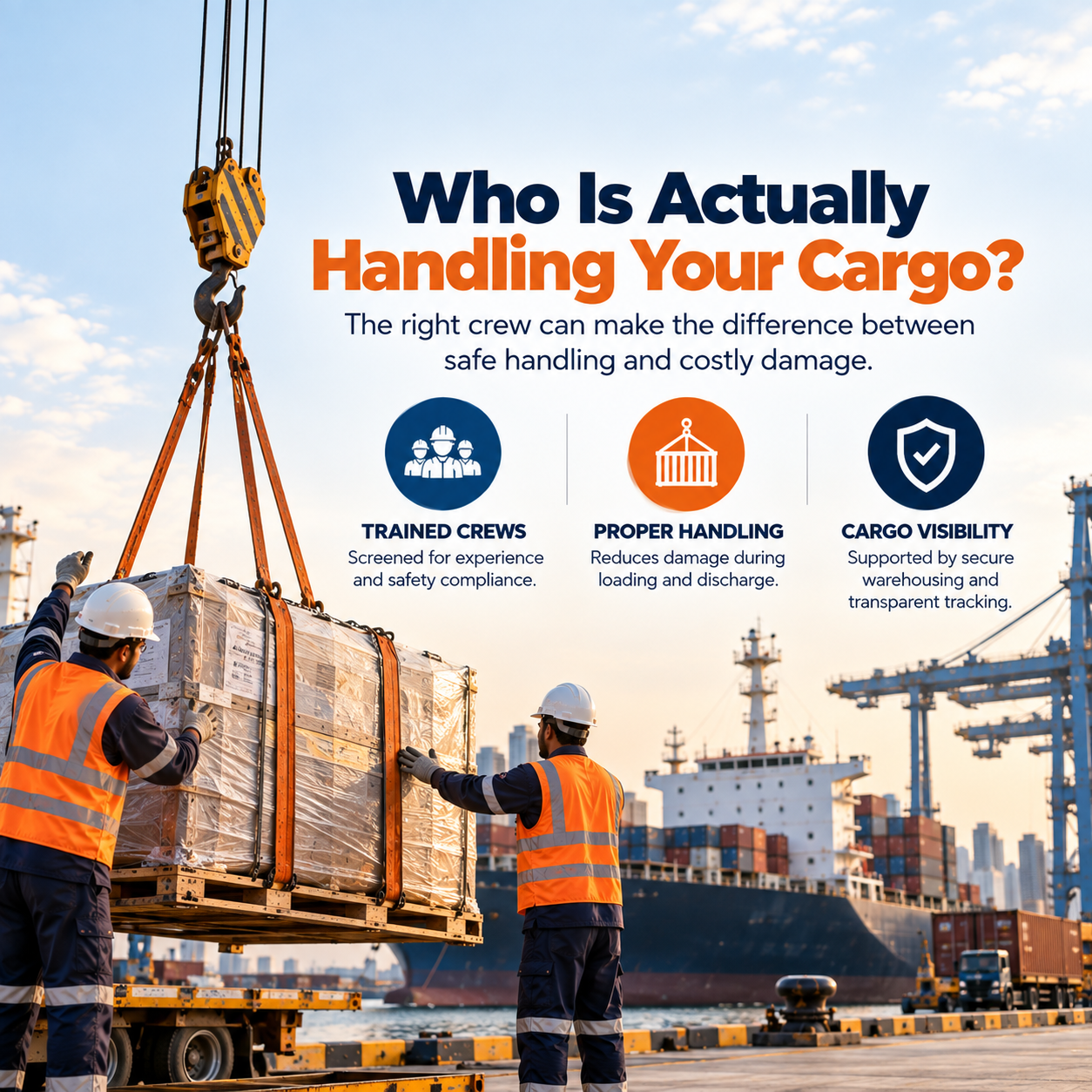
Vetted stevedoring means using cargo handling crews who have been screened for training, safety compliance, and handling competence, rather than whoever happens to be available at the dock that day. It's one of three pillars, alongside secure warehousing and transparent tracking, that define what a genuinely reliable cargo service looks like for project and containerized shipments in the UAE. For anyone moving cargo through Dubai, Jebel Ali, or Abu Dhabi, who's physically handling that cargo often matters more than people realize until something goes wrong.
Why Does Stevedoring Quality Actually Matter?
Stevedoring quality matters because poor handling and preparation are among the leading causes of cargo damage industry-wide, not a rare or occasional problem. According to data cited by the TT Club, poor packing and inadequate cargo securing account for 65% of containerized cargo damage claims, making shore-side errors the single largest contributor to cargo loss across the shipping industry.
Allianz Commercial publishes an annual review of shipping risk, and their data points to the same conclusion from a different angle: most cargo damage traces back to what happens before and during loading, not what happens at sea. Crews rushing a lift, stacking cargo incorrectly, or mishandling equipment during loading and unloading show up again and again as root causes in marine insurance reviews.
For cargo owners, that statistic translates into something concrete: the terminal operators and stevedores physically moving a container or pallet have a direct, measurable impact on whether that cargo arrives intact.
What Does "Vetted" Actually Mean in This Context?
Vetted stevedoring comes down to one simple filter: crews get evaluated on experience, safety habits, and how well they actually handle equipment before they're ever put in charge of a shipment, not just slotted in because they happened to be free. That matters because cargo passes through several hands along the way- loading, transit, discharge- and each handoff is another chance for a rushed move or a simple mistake to turn into real damage.
Rushed operations, inadequate equipment, and inconsistent training are recurring themes across cargo claims data, and they're exactly what proper vetting is designed to filter out. A vetted crew brings steady, reliable handling to a process that would otherwise depend on whoever happens to be working that shift.
This is part of why Aurora Shipping specifically highlights vetted stevedores as a differentiator, rather than treating cargo handling as an interchangeable commodity.
How Does Poor Handling Actually Cause Damage?
Poor handling causes damage through a few consistent, well-documented failure points: dropped containers, crushed goods, improper lifting, and rushed procedures that skip proper securing steps. Crane failures, forklift accidents, and inadequate lifting gear all show up repeatedly in cargo claims as preventable causes rather than unavoidable accidents.
Language barriers between ship crews and shore personnel can compound these risks further, leading to misunderstandings about handling requirements for sensitive or high-value cargo. Combine that with pressure to minimize port time, and the conditions for shortcuts in proper handling procedure become easy to understand.
Vetted crews reduce this risk specifically because they're evaluated on procedure and training, not just speed, which matters most for project cargo where handling errors are harder and more expensive to reverse.
Why Does This Matter More for Project and Containerized Cargo Specifically?
Project and containerized cargo carry different risk profiles, but both depend heavily on handling quality at transfer points. Containerized cargo faces risk primarily during loading and discharge, exactly where most documented handling-related claims occur, while project cargo often involves oversized or irregular loads where improper lifting technique has immediate, visible consequences.
This is why Aurora Shipping's cargo service is positioned specifically around project and containerized shipments rather than general freight handling. Both categories benefit from crews who understand the specific risks tied to their cargo type, rather than applying a one-size-fits-all handling approach across every shipment that comes through.
How Does Vetted Stevedoring Fit Into a Full Cargo Service?
Vetted stevedoring works best as part of a coordinated service rather than a standalone offering, since handling quality alone doesn't solve everything that can go wrong with a shipment. Secure warehousing and transparent tracking complete the picture, addressing what happens before handling begins and after it's complete.
Together, these three elements cover a shipment's full lifecycle: proper storage before movement, careful handling during transfer points, and visibility into where the cargo actually is throughout the process. Removing any one piece leaves a gap that the other two can't fully compensate for.
Vetted Stevedoring vs Standard Cargo Handling: A Comparison
| Factor | Vetted Stevedoring | Standard/Unvetted Handling |
|---|---|---|
| Crew screening | Evaluated for training and safety compliance | Assigned based on availability |
| Handling consistency | Standardized procedures across shipments | Varies by crew and shift |
| Risk of damage | Reduced through trained, accountable crews | Higher, tied to industry-wide handling-related claims |
| Equipment competence | Verified before assignment | Not consistently verified |
| Best suited for | Project cargo and high-value containerized shipments | Low-risk, low-complexity cargo only |
Frequently Asked Questions
What This Means for Choosing a Cargo Service
Vetted stevedoring isn't a minor operational detail; it's one of the clearest, most measurable factors separating a reliable cargo service from one that simply moves containers and hopes nothing goes wrong. With poor handling responsible for the majority of documented cargo claims industry-wide, who physically handles a shipment deserves the same scrutiny as who makes the booking or files the paperwork.
A genuinely reliable cargo service combines vetted stevedoring with secure warehousing and transparent tracking to support project and containerised shipments across Dubai, Jebel Ali, and Abu Dhabi. For anyone evaluating a cargo service in the UAE, this three-part approach is worth asking any potential provider whether they can genuinely match.
Choosing Handling Quality You Can Actually Verify
The data is consistent across multiple industry sources: handling, not weather, not documentation, not even packaging alone, is where most preventable cargo damage actually originates. That makes stevedoring quality one of the few factors a cargo owner can meaningfully evaluate before a shipment ever leaves the dock, rather than discovering the consequences after the fact.
Asking a potential cargo service provider direct questions about how crews are screened, what safety procedures they follow, and how handling errors are tracked and addressed tends to separate providers who treat this seriously from those who don't. Aurora Shipping's cargo service, built around vetted stevedores, secure warehousing, and transparent tracking, reflects exactly the kind of scrutiny this part of the process deserves. For project and containerized shipments moving through UAE ports, that distinction tends to matter most when it's too late to change providers mid-shipment.